Willamette Valley Vineyard Homes: What Ownership Feels Like
May 7, 2026
May 7, 2026
Dreaming about a vineyard home in the Willamette Valley? It is easy to picture the views, the vines, and the peaceful setting, but daily life on this kind of property is more hands-on than many buyers first expect. If you are considering a vineyard home near Salem and the 97306 area, this guide will help you understand the landscape, the lifestyle, and the practical realities so you can decide whether it fits the life you want. Let’s dive in.
In the Willamette Valley, a vineyard property is shaped first by the site itself. Oregon State University Extension notes that vineyard suitability depends on growing-season length, frost risk, rainfall patterns, irrigation access, soil depth, water-holding capacity, and drainage. In other words, the beauty of the property is only part of the story.
That is one reason vineyard homes feel different from standard acreage properties. You are not just buying open land with a house on it. You are stepping into a working landscape where topography, soil, and water planning all affect how the property functions over time.
The setting is part of the appeal. The Willamette Valley is Oregon’s first federally recognized AVA, and it remains one of the world’s leading Pinot noir regions. The area includes more than two-thirds of Oregon’s vineyards and wineries, which gives many properties a true wine-country identity rather than just a scenic rural backdrop.
The valley stretches more than 100 miles from Portland to Eugene and sits between the Coast Range and the Cascades. That geography helps create warm but not hot summers, cool nights, mild winters, and a long growing season. For vineyard owners, those conditions are a major reason the region has become so closely associated with wine grapes.
The vineyards themselves help define the look of the area. Pinot noir is the signature grape, with Pinot gris and Chardonnay also widely planted in the region. If you imagine rolling rows of vines across hillsides and open agricultural land, that picture is grounded in how this region is actually used.
Soils also matter here. The Willamette Valley includes valley-floor alluvial soils and hillside volcanic, loess, and sedimentary soils. That range helps create variety across properties, and it also explains why one vineyard site can feel very different from another even within the same broader region.
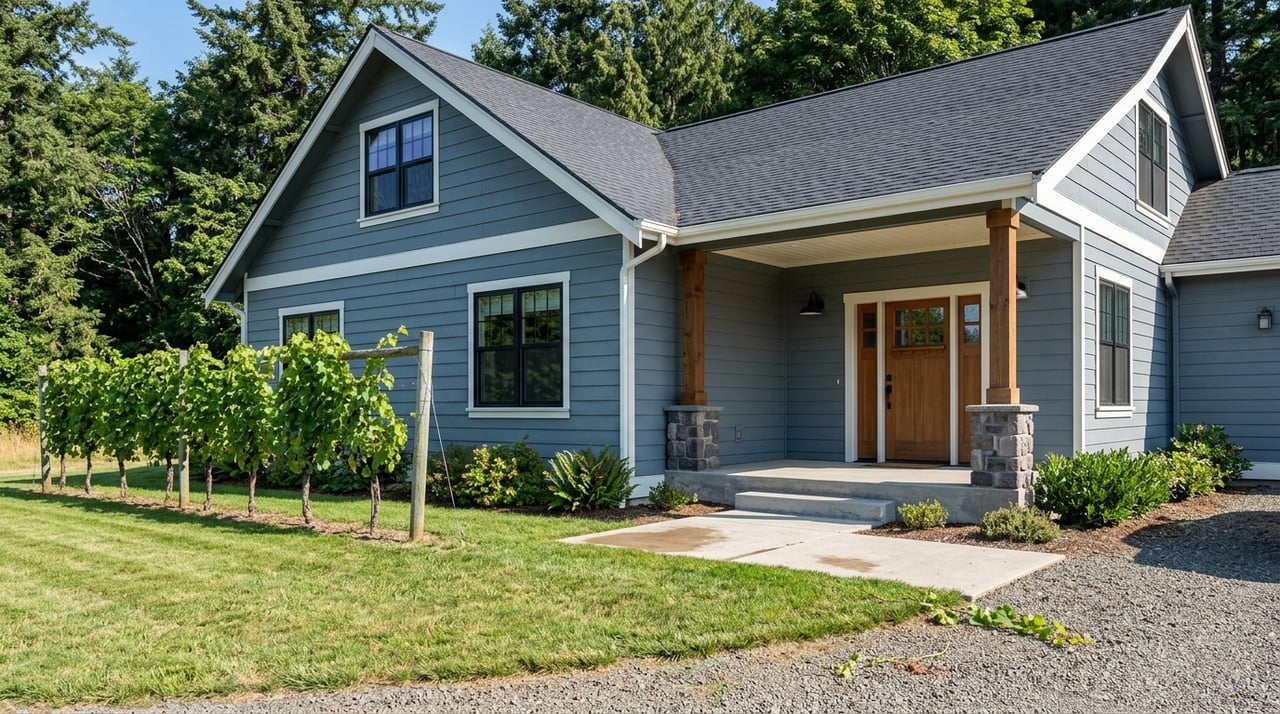
A vineyard home often includes much more than a house and a pretty view. You may see trellised vine rows, planned spacing between rows, irrigation systems or irrigation planning, and land arranged around both residential use and agricultural function. These are not just cosmetic features. They are part of how the property works.
That is why vineyard ownership is usually more involved than owning a typical country home. Oregon State University Extension makes clear that successful vineyard land depends on careful choices about water, soils, and site conditions. A property may feel peaceful and private, but it still requires thoughtful management.
For some buyers, that is exactly the draw. A vineyard home can offer a deeper connection to the land and a strong sense of place in Oregon wine country. It can also carry an agricultural identity that matters to owners, especially in a region where AVA location may support grape and wine marketing.
One of the biggest surprises for buyers is how much the year is shaped by the vines. Vineyard living follows a clear seasonal cycle, and that cycle affects both the property and your day-to-day routine. If you are looking for a low-maintenance lifestyle, this is important to understand early.
Winter is not an off-season in the casual sense. Oregon State University Extension says grapes require vigorous annual pruning, and common methods in Oregon include cane pruning and spur pruning. That work is a regular part of keeping vines productive.
For owners, winter can feel quieter, but it is still active. Wet weather, dormant vines, and pruning schedules become part of the routine. The landscape may look still, yet this is one of the key management periods of the year.
As vines wake up in spring, the work shifts. Oregon State University Extension notes that pest control is tied to grape growth stage and seasonal climate, with attention needed for weeds, insects, mites, and diseases. That means spring is not just about enjoying the view as everything greens up.
Instead, spring is often a season of observation and response. You are watching conditions, checking vine health, and staying aware of changing weather. The property starts to feel more active, and the timing of decisions becomes more important.
Summer in the Salem area is much drier than many newcomers expect. NOAA climate normals for Salem show annual precipitation around 40.08 inches, but July and August average only 0.25 and 0.39 inches of rain. Average highs are about 83.5°F in July and 83.6°F in August, which makes irrigation planning especially important.
Oregon State University Extension specifically flags low annual rainfall and irrigation access as key vineyard concerns. It also notes that irrigation before a heat event can help vines handle high temperatures, while leaf removal and vineyard-floor management can reduce heat and sun stress. In practical terms, summer is a season of active oversight, not passive enjoyment.
Late summer and fall are often the most exciting parts of vineyard life. This is when grapes ripen and harvest approaches, and the property can feel especially alive and purposeful. It is also when your attention to timing and conditions really matters.
Smoke risk is one reason. Oregon State University Extension says grapes are particularly sensitive to smoke exposure between veraison and harvest. For vineyard homeowners, wildfire smoke is not just a general regional issue. It can become a direct factor in property management and harvest planning.
A vineyard home can be beautiful, peaceful, and rewarding, but it usually is not simple to maintain. The seasonal cycle includes pruning, pest monitoring, irrigation planning, and weather-based decisions throughout the year. If you want a property that mostly takes care of itself, a vineyard may not be the right match.
That said, many buyers are not looking for simple. They are looking for meaning, scenery, and a lifestyle tied to the land. In that case, the extra responsibility can feel like part of the value rather than a drawback.
One of the advantages of owning a vineyard-oriented property near Salem is that you can still stay connected to everyday conveniences. The City of Salem describes downtown as a destination with shops, entertainment venues, and walking and biking trails. Riverfront Park connects to Minto-Brown Island Park and Wallace Marine Park, and Minto-Brown offers about 1,200 acres and 29 miles of trails.
That balance matters for many buyers. You can enjoy a wine-country setting without feeling cut off from services, recreation, or daily errands. For relocation buyers in particular, this often makes the area feel more practical and livable than they expected.
Transportation and regional access are another plus. The Salem-Willamette Valley Airport is city-owned, located two miles from downtown, and positioned near Interstate 5 and Highway 22. Salem Hospital is also centrally located and serves as a major regional hospital for the Mid-Willamette Valley.
Before you buy a vineyard home, it helps to look beyond the photos and ask how the property actually functions. A beautiful house on vineyard land may still come with important questions about irrigation access, soil conditions, frost exposure, and drainage. These details shape both the lifestyle and the long-term usefulness of the property.
You should also think honestly about your goals. Are you looking for a scenic home with agricultural character, or do you want a property that supports active vineyard management? The answer affects what kind of land, layout, and location will make sense for you.
This is where local guidance matters. Vineyard and acreage properties are not one-size-fits-all, and the right fit often comes down to nuances that are easy to miss online. A broker with experience in Willamette Valley land, acreage, and specialty properties can help you compare options with more confidence.
If you are exploring vineyard homes or other specialty properties in the Willamette Valley, Debbie Brand can help you evaluate the setting, the lifestyle, and the practical details so you can move forward with clarity.

Get assistance in determining current property value, crafting a competitive offer, writing and negotiating a contract, and much more. Contact me today.